Operations • 31 May 2026 • 8 min read
Fabric Defects And Inspection: A Buyer-Friendly Guide To Quality Review
How bulk fabric buyers should think about inspection, defect visibility, approval samples, packing and practical quality communication.
Quality Is Application-Specific
A defect that is unacceptable on satin may be less visible on a textured fabric. A fabric for premium garments may need a different review standard than a lower-risk use.
Buyers should communicate final application and quality expectation before bulk approval.
Review The Right Areas
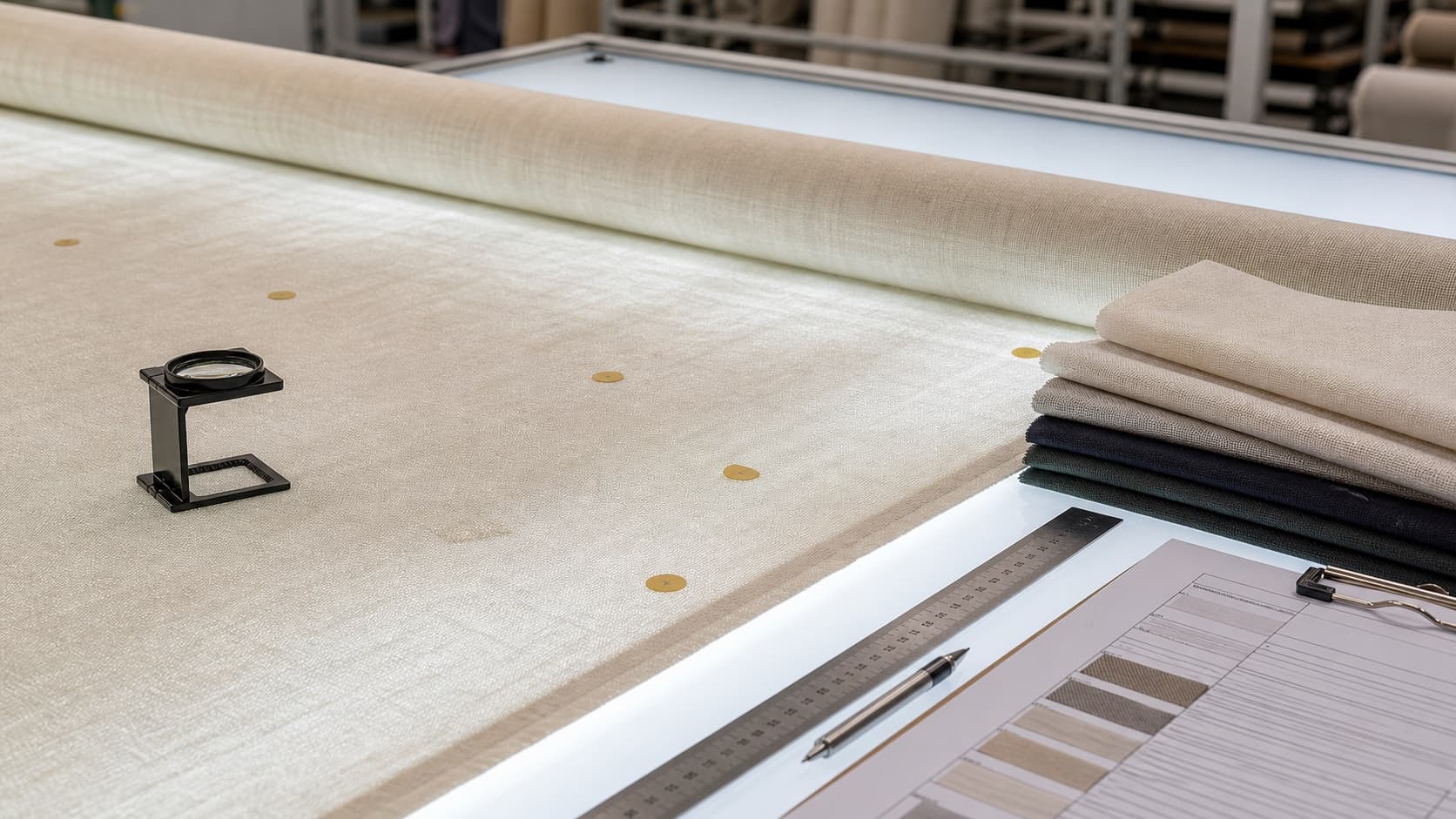
Check surface marks, yarn defects, shade variation, stains, holes, crease behavior, selvedge and width consistency.
The approved sample or swatch should remain visible as the comparison point.
- Surface defects
- Width and GSM consistency
- Shade or lot variation
- Selvedge condition
- Packing and roll labeling
Make Inspection Commercially Useful
Inspection should not become a vague argument after dispatch. Agree what matters for the buyer's garment and how concerns will be communicated.
A clear quality conversation protects both buyer and supplier.
// Buyer FAQ
Common Questions
Do all fabrics need the same inspection standard?
No. Inspection should reflect fabric type, surface, color, application and buyer requirement.
Why keep an approved reference sample?
It gives both sides a shared comparison point for bulk production and repeat orders.
// Next Buying Step
Turn This Into A Fabric Inquiry
Use the guide above to shortlist fabric type, width, GSM, finish stage, quantity, country, and sample requirement before contacting AERA TEX.