

Costing • 28 May 2026 • 11 min read
Fabric Costing From Zero: A Practical Framework For New Weavers And Buyers
A plain-English system for estimating per-meter fabric cost from yarn inputs, shortage, overhead, GST view and final quote logic.
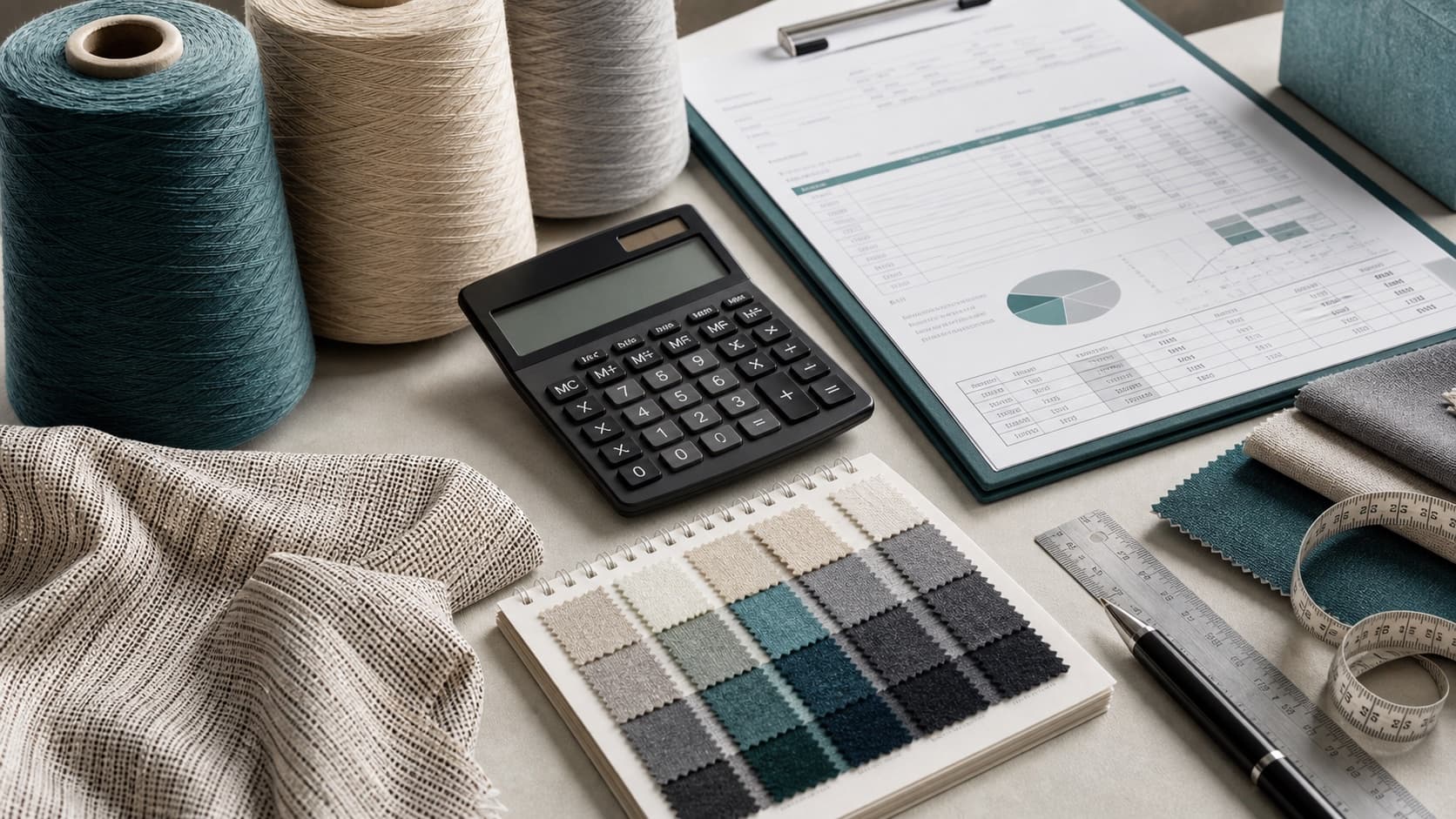
Lock The Construction First
A fabric cost sheet is only as reliable as its inputs. First freeze width, total ends, PPI, warp yarn, each weft yarn and finish stage.
If these inputs change after price discussion, the quote can move even when yarn rates stay the same.
- Width and panno
- Total ends and PPI
- Warp and each weft yarn
- Finish and processing stage
Convert Yarn Before Weight
Use tex as the common bridge. Denier converts to tex by dividing by 9. Cotton count Ne converts to tex by 590.5 divided by Ne.
Once all yarn streams are in tex, warp and weft weight become easier to compare.
Add Commercial Layers In Order
Calculate yarn cost first, then apply shortage, then add process cost, khata kharch and commercial overhead. GST should be visible separately so production economics stay clear.
This sequence helps weavers and buyers understand why a fabric price changes.
// Buyer FAQ
Common Questions
Why should warp and weft be costed separately?
Separate visibility makes it easier to adjust yarns, shortage and rates without hiding the cause of price movement.
Should GST be included in break-even cost?
For planning, keep ex-GST break-even separate from invoice GST so production economics remain clear.
// Next Buying Step
Turn This Into A Fabric Inquiry
Use the guide above to shortlist fabric type, width, GSM, finish stage, quantity, country, and sample requirement before contacting AERA TEX.